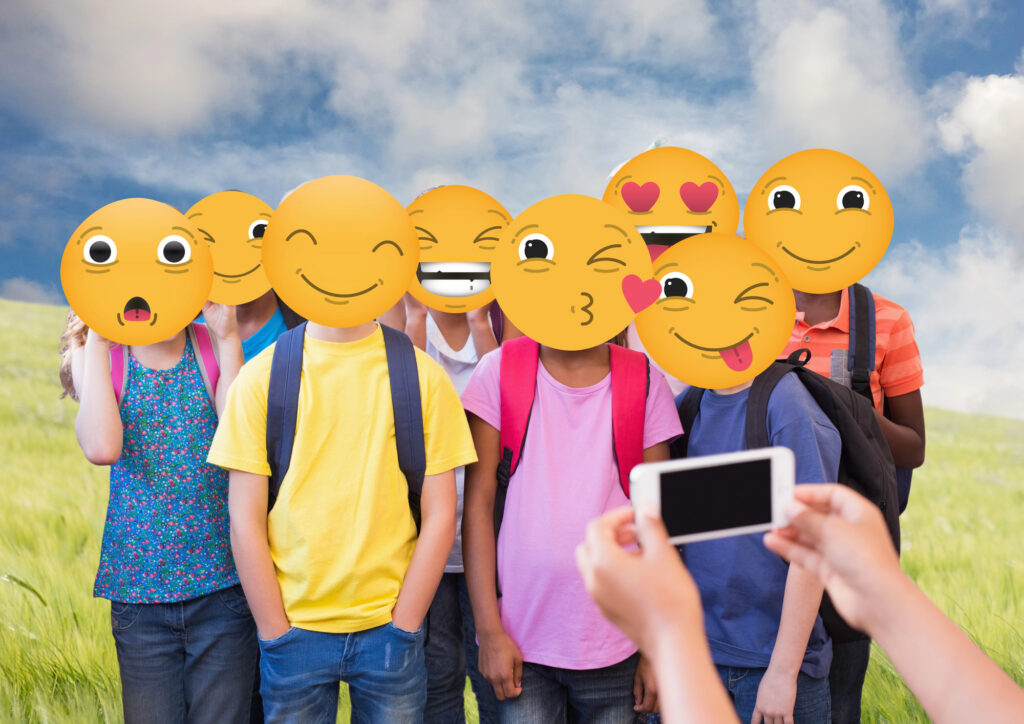
Instagram AI is beginning to appear on more and more accounts, bringing new ways to create and alter images using artificial intelligence. If your organisation regularly shares children’s photos on Instagram, I think it’s worth pausing to decide whether you actually want those features switched on.
For many people these new features will simply be another way to have fun with their photos. If your account is full of holiday snaps, pets and pictures of your lunch, you may decide they’re a welcome addition. I think organisations working with children need to look at them rather differently.
This isn’t because Instagram has suddenly become unsafe, or because using AI is automatically a breach of GDPR. It isn’t. I simply think children’s photographs deserve a little more thought before new technology is allowed to use them. Parents trusted you with those images for a reason, and it’s worth making a conscious decision about how they’re used as AI continues to evolve.
If you haven’t come across these new features yet, it’s worth reading Meta’s own explanation of what has changed and how the tools work. n.
Do You Actually Need Instagram AI?
This is the first question I’d ask, and in many ways it’s the easiest one to answer.
What problem are you trying to solve?
I have to admit I’m struggling to see the marketing benefit of allowing AI to use photographs of children. Most of the people I work with share children’s photographs to give parents an authentic glimpse of what happens in their classes, clubs and activities. Those photographs help families decide whether your organisation feels like the right fit for their child. I don’t think AI-generated or AI-altered versions of those images make that marketing any stronger.
There may be organisations that answer that question differently, and if they can, that’s entirely their decision to make. For most of the businesses I support, however, I think the answer is likely to be much simpler. If you can’t identify a genuine benefit for your organisation or your customers, why leave the feature switched on?
Technology companies quite naturally want us to try their latest innovations. That’s how technology develops. As business owners, though, we don’t have to adopt every new feature simply because it’s available. Sometimes the best decision is to leave something switched off until you’ve had time to understand it properly.
When children’s photographs are involved, I think that’s a sensible approach.
Why Children’s Photos Deserve a Little More Thought
If you’ve already read my article, Children’s Data and AI: What UK Activity Providers Need to Check in 2026, you’ll know this isn’t the first time I’ve encouraged organisations working with children to stop and think before embracing new AI tools.
In that article I looked at the wider questions surrounding artificial intelligence and children’s data, including where AI is being introduced into everyday business systems and the importance of understanding what’s happening behind the scenes. If you haven’t read it yet, it’s a useful companion to this article.
Instagram AI is a much more specific example of the same principle.
Parents usually agree to photographs being taken because they want to see their children enjoying themselves, celebrate achievements and help other families understand what your organisation offers. I don’t think most parents are thinking about artificial intelligence when they tick a photography consent form.
For many organisations, the question isn’t just what they’ll post next week. It’s what happens to the years of children’s photographs that are already on a public Instagram account.
The Internet Watch Foundation and the National Crime Agency and other bodies have published a guide on this that everyone who posts pictures of children should read as part of deciding what to do . Here it is
That doesn’t automatically mean Instagram AI is wrong or that you can’t use it. It simply means it’s worth asking whether the decision still reflects the expectations of the families you work with. If you decide the answer is yes, that’s absolutely your decision. If you’re not sure, I think it’s perfectly reasonable to switch the feature off while you review your position.
With convincing AI-generated images and deepfakes becoming easier to create, many organisations are understandably taking a more cautious approach to how children’s photographs are used online. I don’t think that’s an overreaction. I think it’s simply good governance.
Five Things to Review Before Letting Instagram AI Use Children’s Photos
Whether you decide to leave Instagram AI switched on or turn it off is ultimately your decision. Before you make that choice, though, I think there are five questions worth asking.
1. Do you actually need it?
We’ve already looked at this, but it’s the place to start. Every new feature should earn its place in your business.
If Instagram AI genuinely improves your marketing, helps your customers or saves you time without creating unnecessary risks, it may well deserve a place in your toolkit. If you can’t identify a clear benefit, I’m not convinced it’s worth introducing another consideration into the way you use children’s photographs.
2. Does your photography consent cover this?
Most photography consent forms were written before AI image tools became part of everyday social media.
Parents may have been happy for you to use photographs on your website, Facebook page or Instagram account, but would they reasonably expect those same images to become part of AI-powered image features?
This isn’t about frightening parents or rewriting every consent form overnight. It’s about checking whether your existing wording still reflects what actually happens to children’s photographs once they’re uploaded.
3. Does your privacy information still reflect reality?
Privacy notices are supposed to explain what happens to personal information in language people can understand.
If you’re using new technology that wasn’t considered when your privacy notice was written, this is a good opportunity to review whether it still accurately describes what happens to photographs and who may process them.
Sometimes nothing needs to change. Sometimes a small update is all that’s required. The important thing is that your documentation reflects reality rather than the way your systems worked two years ago.
4. What are your team doing?
Many organisations have clear rules about photographs shared through their official social media accounts, but far fewer have considered what happens when team members post children’s photographs from their own public accounts.
Now is a good time to review your social media guidance and remind everyone of your expectations. If people are taking or sharing photographs connected with your organisation, they need to understand not only your photography policy, but also how new AI features could affect those images once they’re online.
A short conversation today may prevent an awkward conversation with a parent later.
5. Would you feel comfortable explaining your decision to parents?
This is probably my favourite test because it’s so simple.
If a parent asked why Instagram AI was switched on and how it might use photographs of their child, would you feel comfortable explaining your decision?
If the answer is yes, you’ve probably thought it through.
If the answer is, “I’m not really sure,” then I think you’ve got your answer.
Technology Moves Faster Than Expectations
One of the challenges with artificial intelligence is that it develops far more quickly than most of us can keep up.
Parents who agreed to photographs being taken six months or a year ago were probably thinking about your website, Facebook page or Instagram account. I doubt many of them imagined those same images becoming part of new AI-powered features that didn’t even exist when they completed your paperwork.
That doesn’t automatically mean you need to start again or that every consent form has suddenly become invalid. It does mean this is a good opportunity to pause and ask whether the way you’re using children’s photographs still matches what a reasonable parent would expect.
You’ve probably spent years building a reputation for putting children first. I don’t think it’s unreasonable to ask whether leaving Instagram AI switched on strengthens that trust or simply introduces another question you don’t really need to answer.
Sometimes good data protection isn’t about doing more. It’s about recognising when the simplest option is also the most sensible one.
Where Can You Find the Instagram AI Settings?
By this point, you may already have decided you’d like to review the feature before carrying on as normal. The next question is simply where to find the settings.
Rather than include step-by-step instructions that may be out of date by the time you read this article, I’d recommend using Meta’s own guidance. Instagram changes regularly, and menu options have a habit of moving just when you’ve written the perfect set of instructions.
I’ll include links below to Meta’s official announcement and the latest help information so you can review the feature and decide what’s right for your organisation.
This isn’t a reason to stop sharing children’s photographs altogether. It’s simply a reason to review how new technology fits with the way you already work.
My Recommendation
II’ve spent years helping small businesses understand what’s happening to their data and make sensible decisions about it. I’m not a technology expert and I’m certainly not an AI evangelist. My job is to help you understand the practical implications so you can make informed decisions for your own business.
That doesn’t mean you should never use it, and it certainly doesn’t mean the technology won’t develop into something genuinely useful in the future. It simply means I think this is one of those occasions when it’s worth making a conscious decision rather than accepting the default.
If, having reviewed the feature, you decide it offers a genuine benefit to your organisation and you’re satisfied that your photography consent, privacy information and social media practices all support that decision, then that’s your choice.
If you’re not sure, I’d turn it off.
You can always switch it back on later.
Because, in the end, this isn’t really about Instagram or artificial intelligence. It’s about the children.
If you work with children, you may also find our Children’s Activity Provider Contracts and GDPR page helpful. It brings together practical guidance, contract templates and GDPR resources and articles designed specifically for organisations working with children.
A Note for Parents
Although I’ve written this for organisations working with children, the same question is worth asking if you’re a parent who regularly shares photographs of your own children on Instagram.
Whether you decide to leave the feature switched on or turn it off is your decision. I simply think it’s worth pausing to make that decision consciously rather than discovering later that a new AI feature was enabled without you ever giving it a second thought.
Update – July 2026
Since this article was first published, Meta has withdrawn the Instagram AI feature following public criticism.
That does not change the wider privacy and safeguarding issues raised by this article.
For organisations working with children, the important lesson is not whether one particular AI feature remains available, but how new AI tools are introduced and assessed.
In my view, features that analyse, generate or otherwise process users’ content using AI should always be opt in, not opt out.
Existing users should not discover that a new AI feature has been switched on automatically following a platform update.
Instead, organisations and individuals should be given clear information about what the feature does, understand any privacy and safeguarding implications, and make an informed decision about whether to enable it.
The fact that Meta has already withdrawn this feature illustrates how quickly AI products can change.
Organisations that work with children’s photos and data (and parents!) should review new AI features whenever social media platforms introduce them, rather than relying on default settings to make those decisions for them.
Who knows what they are going to get up to next?
But when we do, you do if you are on our newsletter list for children’s data.